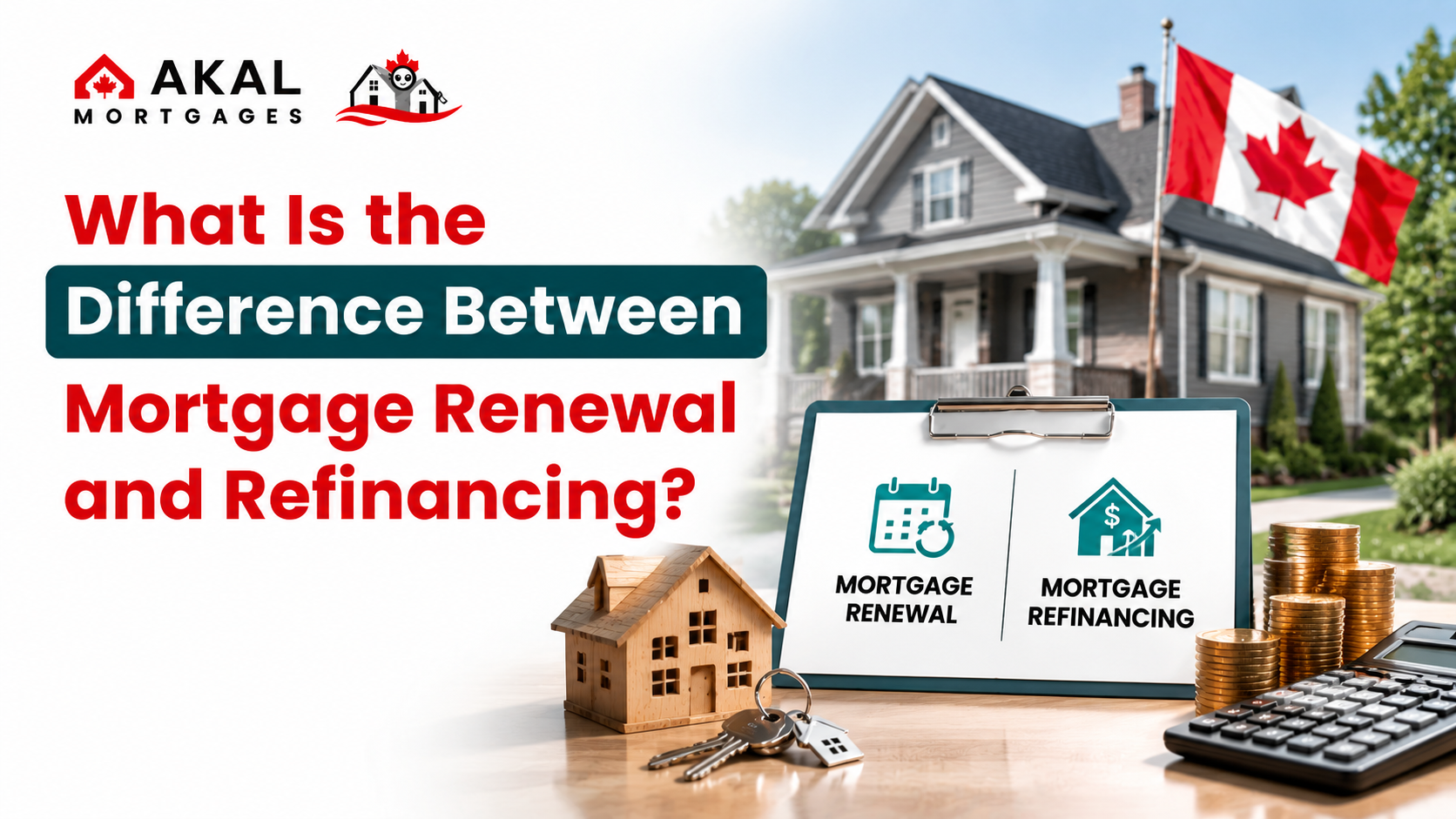

When your mortgage term is coming to an end, you have an important financial decision to make. Many homeowners assume that renewing a mortgage and refinancing are essentially the same thing, but they serve different purposes and can have very different financial consequences.
A mortgage renewal generally means continuing your existing mortgage with the same lender or moving it to another lender without significantly changing the amount you owe. Mortgage refinancing, on the other hand, involves changing the terms or increasing the amount of your mortgage, often to access home equity or manage other financial needs.
Understanding the difference between mortgage renewal and refinancing can help you choose the option that better fits your circumstances. The right decision depends on your current mortgage, financial goals, interest rate, debts, and plans for your home.
What Is a Mortgage Renewal?
A mortgage renewal happens when your current mortgage term ends and you still have an outstanding balance. Instead of paying off the entire mortgage, you enter into a new term with your existing lender or potentially transfer the mortgage to another lender.
For example, if you have a five-year mortgage term and still owe money when that term expires, you will generally need to arrange a new term. This is where the renewal process begins.
A renewal can be relatively straightforward when your financial situation has remained stable. However, it should not be treated as an automatic decision. Your renewal date is an opportunity to review your interest rate, mortgage terms, payment structure, and whether another lender could offer more suitable conditions.
What Is Mortgage Refinancing?
Mortgage refinancing involves making a more substantial change to your existing mortgage. Homeowners often refinance when they want to access some of the equity they have built in their property, consolidate higher-interest debt, finance a major expense, or change the structure of their borrowing.
For instance, if your home has increased in value and you have built significant equity, refinancing may allow you to borrow against a portion of that equity. The additional funds can potentially be used for purposes such as renovations, investments, education expenses, or debt consolidation.
Refinancing is usually more involved than a straightforward renewal because the lender needs to reassess your financial circumstances. Your income, debts, credit history, property value, and ability to manage the new mortgage amount may all be considered.
Mortgage Renewal vs. Refinancing: The Main Difference gage?
The simplest way to understand the distinction is to consider whether you are continuing your existing borrowing or changing it.
With a mortgage renewal, you are usually renewing your mortgage for another term after the existing term expires. The principal balance generally remains similar, although the interest rate and other terms may change.
With mortgage refinancing, you are changing the existing mortgage more substantially. This can include increasing the mortgage amount, changing the loan structure, or accessing equity from your property.
The best choice depends on what you want your mortgage to accomplish during the next stage of homeownership.
When Does a Mortgage Renewal Make Sense?
A mortgage renewal may be suitable when you are comfortable with your current mortgage amount and do not need to access additional funds.
For example, if your main goal is to secure a competitive interest rate for another term while continuing to pay down your mortgage, renewal may be the simpler option. You can compare offers from your existing lender and other lenders before deciding where to place your mortgage.
Your renewal is also a good opportunity to review whether your payment frequency, amortization period, and other mortgage features still suit your financial goals. Even if you are not borrowing additional money, there may be value in negotiating better terms.
When Should You Consider Refinancing?
Refinancing may be worth considering when your financial needs have changed since you first obtained your mortgage. One common reason homeowners refinance is to access home equity.
Suppose you have owned your home for several years, paid down a portion of your mortgage, and seen the property’s value increase. You may have substantial equity available. Depending on your circumstances and lender requirements, refinancing could allow you to access some of that equity without selling your home.
Another common reason is debt consolidation. If you have several high-interest debts, refinancing may allow you to combine some of those obligations into your mortgage. Since mortgage interest rates can be lower than rates on certain unsecured debts, this strategy may reduce interest costs, although it also converts those debts into borrowing secured against your home.
Can You Refinance During a Mortgage Renewal?
Yes, the end of your mortgage term can be an appropriate time to explore refinancing. One advantage is that you may avoid the prepayment penalty that could apply if you break your existing mortgage before the term ends.
However, refinancing at renewal does not automatically mean that it is the better choice. You should compare the new mortgage amount, interest rate, fees, payment requirements, and long-term cost before proceeding.
If your financial goals have changed, your renewal date provides a natural opportunity to review whether simply renewing or restructuring your mortgage makes more sense.
Can You Switch Lenders When Renewing?
Yes, homeowners are not necessarily required to renew with their existing lender. You can explore offers from other lenders and determine whether transferring your mortgage could provide better terms.
A lender offering a lower interest rate may appear attractive, but the rate should not be the only factor you consider. Mortgage features, penalties, fees, flexibility, and the overall cost of the mortgage can also affect whether switching makes financial sense.
Starting the comparison process before your renewal date gives you more time to understand your options rather than accepting the first offer you receive.
Does Refinancing Affect Your Mortgage Payment?
It can. Your mortgage payment may change depending on the amount you refinance, the new interest rate, the amortization period, and the payment schedule.
If you increase the amount borrowed, your payments could rise even if the new interest rate is lower than your existing rate. Extending the amortization period may reduce your monthly payment, but it can result in paying interest for a longer period.
This is why homeowners should look beyond the monthly payment and consider the total borrowing cost over time.
What Costs Are Involved in Refinancing?
Refinancing can involve additional costs that may not apply to a straightforward mortgage renewal. Depending on the circumstances, these can include appraisal costs, legal fees, lender charges, and penalties if the existing mortgage is being broken before the end of its term.
The cost of refinancing should be compared with the financial benefit you expect to receive. For example, if you are refinancing to consolidate debt, calculate whether the potential interest savings justify the costs involved in changing the mortgage.
Mortgage Renewal or Refinancing: Which Is Better?
There is no universal answer because the two options are designed for different situations.
If you are happy with your mortgage balance and simply want to arrange another term, mortgage renewal may be appropriate. If you want to access equity, consolidate debt, finance a significant expense, or make a substantial change to your mortgage, refinancing may be worth exploring.
The important thing is to look at your mortgage in the context of your broader financial goals. A slightly lower interest rate may not necessarily make a mortgage better if it comes with higher fees, less flexibility, or unfavorable penalties.
Final Thoughts
The difference between mortgage renewal and refinancing comes down to what you are trying to achieve with your home financing.
A renewal is generally about arranging a new mortgage term when your current term ends, while refinancing involves making a more significant change to your mortgage, often by increasing the amount borrowed or accessing home equity. Neither option is automatically better than the other.
Before making a decision, review your mortgage terms, financial goals, interest rate, debts, and the costs involved. Taking the time to compare your options can help you avoid an automatic decision and choose a mortgage strategy that supports your financial plans.
If your mortgage renewal is approaching, this is an ideal time to review your options rather than simply signing the renewal offer. A careful comparison today can make a meaningful difference to your borrowing costs and financial flexibility over the next several years.
Ready to get started
Are you approaching your mortgage renewal and unsure whether you should renew, switch lenders, or refinance? Contact me today for a no-obligation consultation or call 647-982-3313 to discuss your mortgage situation and financial goals. I can help you compare renewal and refinancing options, understand potential costs and payment changes, and determine which mortgage strategy may best suit your needs.
Frequently Asked Questions
What is the main difference between mortgage renewal and refinancing?
A mortgage renewal typically means arranging a new mortgage term when your existing term ends, usually without significantly changing the amount you owe. Refinancing involves making a larger change to your mortgage, such as increasing the loan amount, accessing home equity, or consolidating debt.
Is it better to renew or refinance a mortgage?
It depends on your financial goals. Renewal may be suitable if you are happy with your current mortgage balance and simply want a new term. Refinancing may make more sense if you need additional funds, want to access home equity, or consolidate higher-interest debt.
Property equity, loan amount, and the borrower’s circumstances can also affect the rate.
Can I refinance my mortgage when it comes up for renewal?
Yes. Your mortgage renewal date can be a convenient time to explore refinancing because your existing term is ending. You can compare the costs and benefits of renewing your current mortgage versus restructuring it.
Can I switch lenders when my mortgage is up for renewal?
Yes. You can generally compare mortgage offers from other lenders when your term ends. Switching lenders may help you obtain a more competitive rate or mortgage features that better suit your needs.

Home Mortgage Care came into existence with a sole purpose of helping people who want to make their dream of having a home turn into reality. This is the reason, we don’t represent any lender instead we represent you.
