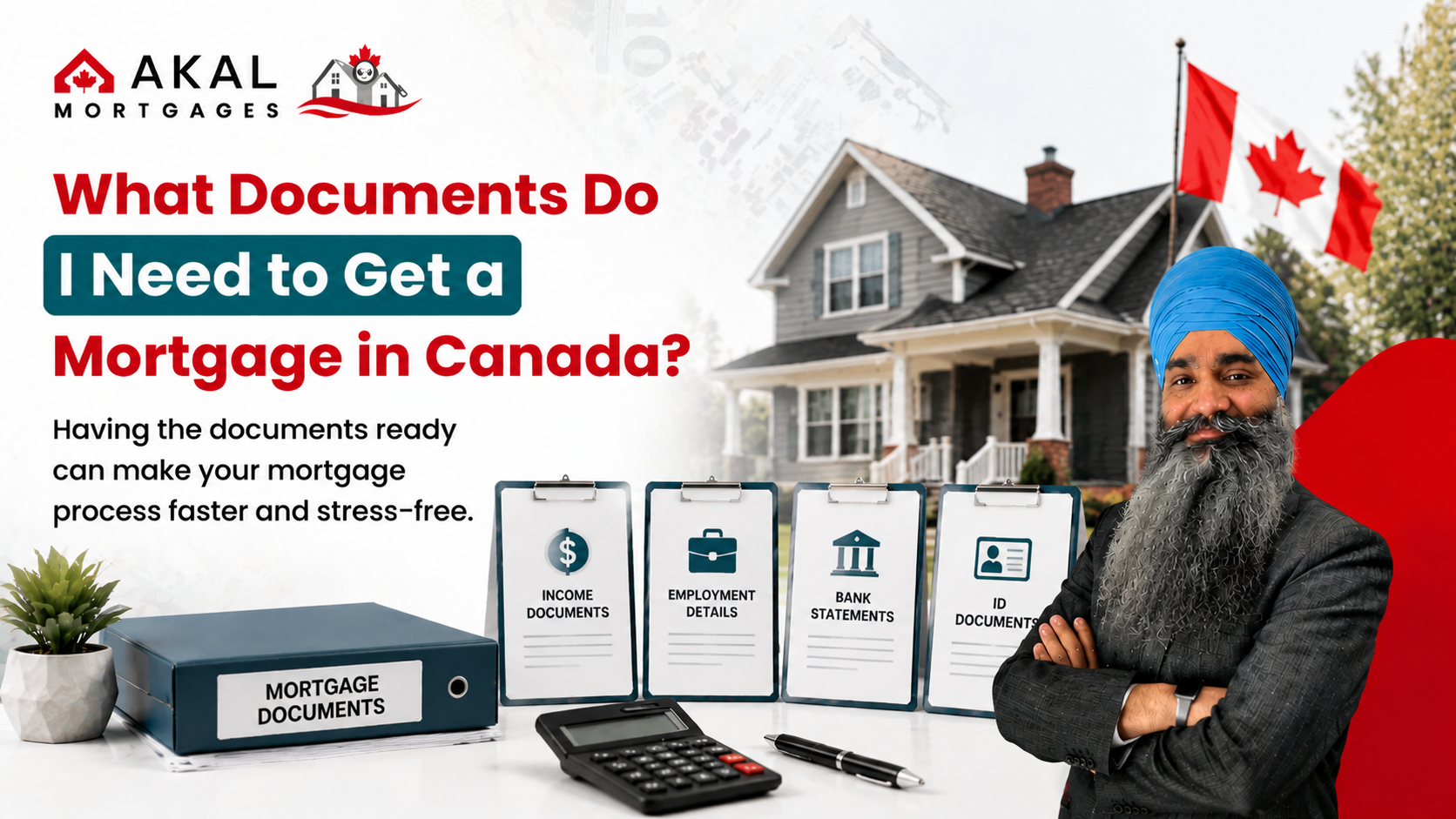

Buying a home is an exciting milestone, but preparing for a mortgage can feel overwhelming if you are not sure what paperwork your lender will request. Knowing what documents you need to get a mortgage in Canada can make the process more organized and help you avoid unnecessary delays. Whether you are buying your first home, moving to a larger property, refinancing, or renewing your mortgage, having the right documents ready can make the application process much smoother.
Mortgage lenders use your documents to understand your income, financial obligations, credit history, employment, and ability to manage mortgage payments. The exact requirements can vary depending on your financial situation, the type of mortgage you are applying for, and the lender you choose. Preparing your paperwork before submitting an application can also give you a clearer picture of your financial position.
Basic Documents Required for a Mortgage in Canada
Most Canadian mortgage applications begin with a standard set of personal and financial documents. Your lender will generally want to confirm your identity, employment, income, assets, debts, and the details of the property you intend to purchase.
Proof of Identification
You will usually need valid government-issued identification when applying for a mortgage. A Canadian passport, provincial driver’s licence, or other accepted identification can be used to confirm your identity and personal information.
If you are a permanent resident or are in Canada under another immigration status, your lender may request additional documents showing your status in Canada. Providing clear and current identification can help prevent delays during the application and verification process.
Proof of Employment and Income
Your income is one of the most important factors a lender considers when assessing a mortgage application. If you are employed, you may be asked for a recent employment letter that confirms your position, length of employment, salary, and other relevant compensation details.
Recent pay statements may also be requested to verify your current earnings. Depending on your situation, your lender could ask for additional income records, particularly if you receive bonuses, commissions, overtime pay, or other variable income.
For some applicants, recent tax documents may also be required. These records can help confirm income reported to the Canada Revenue Agency and provide a broader view of your financial history.
Documents for Self-Employed Mortgage Applicants
If you are self-employed, the documentation for a mortgage application can be more detailed because your income may not appear as straightforward as that of a salaried employee. Lenders may want to see evidence that your business is established and that your income is sufficient to support the proposed mortgage payments.
You may need personal and business tax returns, notices of assessment, financial statements, business registration documents, and bank statements. The lender may also review how long you have been self-employed and whether your income has remained consistent.
Self-employed borrowers should not assume that traditional mortgage financing is unavailable simply because their income structure is different. A mortgage professional can help identify lenders whose requirements are better suited to business owners and other applicants with non-traditional income.
Bank Statements and Proof of Assets
Lenders may ask for recent bank statements to verify your available funds and understand your financial position. These statements can show where your down payment is coming from and help confirm that you have enough money available to complete the purchase.
If you have investments, savings accounts, guaranteed investment certificates, or other financial assets, statements for those accounts may also be useful. If part of your down payment is being provided as a gift from an immediate family member, a lender may request a signed gift letter and supporting documentation.
Keeping your financial records organized is particularly helpful when you have funds spread across several accounts. Clear documentation can make it easier for your lender to confirm the source of your down payment.
Documents for Your Down Payment
Your lender will need to establish that you have access to the funds required for your down payment and closing costs. Depending on where the money comes from, you may need different supporting documents.
For personal savings, recent bank statements are commonly used. If the money comes from the sale of another property, the lender may request documents related to that transaction. Funds from investments, a gift, or another approved source may require their own supporting records.
It is important to keep a clear record of large deposits into your account. Unexplained deposits can lead to additional questions, so having documentation that explains where the money came from can make the verification process easier.
Credit and Debt Information
Your lender will review your credit history and existing financial obligations when assessing your mortgage application. In many cases, the lender can obtain your credit report with your authorization, so you may not need to provide a separate copy yourself.
However, documentation about your existing debts can still be useful. If you have a car loan, personal loan, credit card balances, line of credit, or other financial commitments, the lender may request statements showing the current balance and required payments.
Being upfront about your debts is important. Providing accurate information from the beginning allows your mortgage professional to assess your application properly and identify financing options that realistically fit your financial situation.
Documents Related to the Property
Once you have identified a property, your lender will need information about the home being purchased. This can include the signed purchase agreement, property details, and information about the requested mortgage amount.
For a condominium purchase, additional documents may be required because lenders often need information about the condominium corporation and the property itself. Depending on the circumstances, this could include a status certificate or other condominium documentation.
If you are refinancing an existing property, your lender may instead request your current mortgage statement, property tax information, and details about the property.
Additional Documents You May Need
Not every mortgage applicant has the same financial circumstances, so additional documentation may be requested. For example, someone receiving rental income may need to provide lease agreements, tax records, or evidence of rental deposits.
If you receive support payments, pension income, investment income, or other sources of earnings, your lender may request documents that verify those payments. Applicants who recently changed jobs, returned from parental leave, or have variable income may also need to provide additional information.
This does not necessarily mean there is a problem with your application. It simply allows the lender to build a complete and accurate picture of your financial situation before making a lending decision.
How to Prepare Your Mortgage Documents
Preparing your documents before applying can save time and make the mortgage process less stressful. Start by creating a folder containing your identification, employment information, income records, bank statements, investment statements, debt information, and down payment records.
Make sure your documents are current and easy to read. If you are working with a mortgage broker, ask what specific documents will be needed for your situation before submitting the application. This can help you avoid repeatedly searching for paperwork after the process has already started.
You should also avoid making major financial changes while your mortgage application is being reviewed unless necessary. Taking on new debt, changing jobs, or moving significant amounts of money between accounts may result in additional questions from the lender.
Final Thoughts
Understanding what documents you need to get a mortgage in Canada is an important part of preparing for homeownership. Your lender will generally want to verify your identity, income, employment, credit obligations, down payment, assets, and property information before approving financing.
The required paperwork can differ from one borrower to another, particularly for self-employed individuals, newcomers to Canada, investors, and applicants with multiple sources of income. Preparing your records early and providing accurate information can make the mortgage application process more efficient.
If you are unsure which documents apply to your situation, speaking with a qualified mortgage professional before submitting an application can help you understand your options and prepare with confidence. A well-organized application not only saves time but also gives you a clearer understanding of what you can realistically afford as you move toward purchasing or refinancing a home in Canada.
Ready to Get Started?
Ready to take the next step toward your home purchase? Contact me today for a no-obligation consultation or call 647-982-3313 to learn more about the documents you need for a mortgage in Canada and get personalized guidance throughout the application process.
FAQs: What Documents Do I Need to Get a Mortgage in Canada?
What documents do I need to apply for a mortgage in Canada?
Most lenders will ask for identification, proof of employment and income, bank statements, proof of your down payment, information about existing debts, and property-related documents. The exact requirements depend on your financial situation and the lender.
Do I need proof of income to get a mortgage?
Yes. Lenders generally require documentation to verify your income and determine whether you can comfortably manage the proposed mortgage payments. This may include pay stubs, an employment letter, tax documents, or other income records.
What documents do salaried employees need for a mortgage?
Salaried employees may be asked to provide a recent employment letter, recent pay statements, and tax documents such as a Notice of Assessment. Additional documents may be required if you receive bonuses, commissions, overtime, or other variable income.
What documents do self-employed borrowers need for a mortgage?
Self-employed applicants may need personal and business tax returns, Notices of Assessment, financial statements, business registration documents, and bank statements. Lenders may also consider how long you have been self-employed and the stability of your business income.

Home Mortgage Care came into existence with a sole purpose of helping people who want to make their dream of having a home turn into reality. This is the reason, we don’t represent any lender instead we represent you.
